GPS trackers – from the military to smart guardians
5/21/2026 #Leisure Time
Just a few decades ago, the ability to track the real-time location of an object was reserved for military and space programs. Today, all it takes is a small GPS tracker the size of a matchbox, and within seconds you can know where a car, motorcycle, shipment, or even construction equipment is located.
Location tracking technology has undergone tremendous development — from the first satellite experiments to today’s smart IoT trackers using LTE-M, NB-IoT, or cloud platforms. And it is precisely this evolution that modern Solight GPS trackers are built upon.
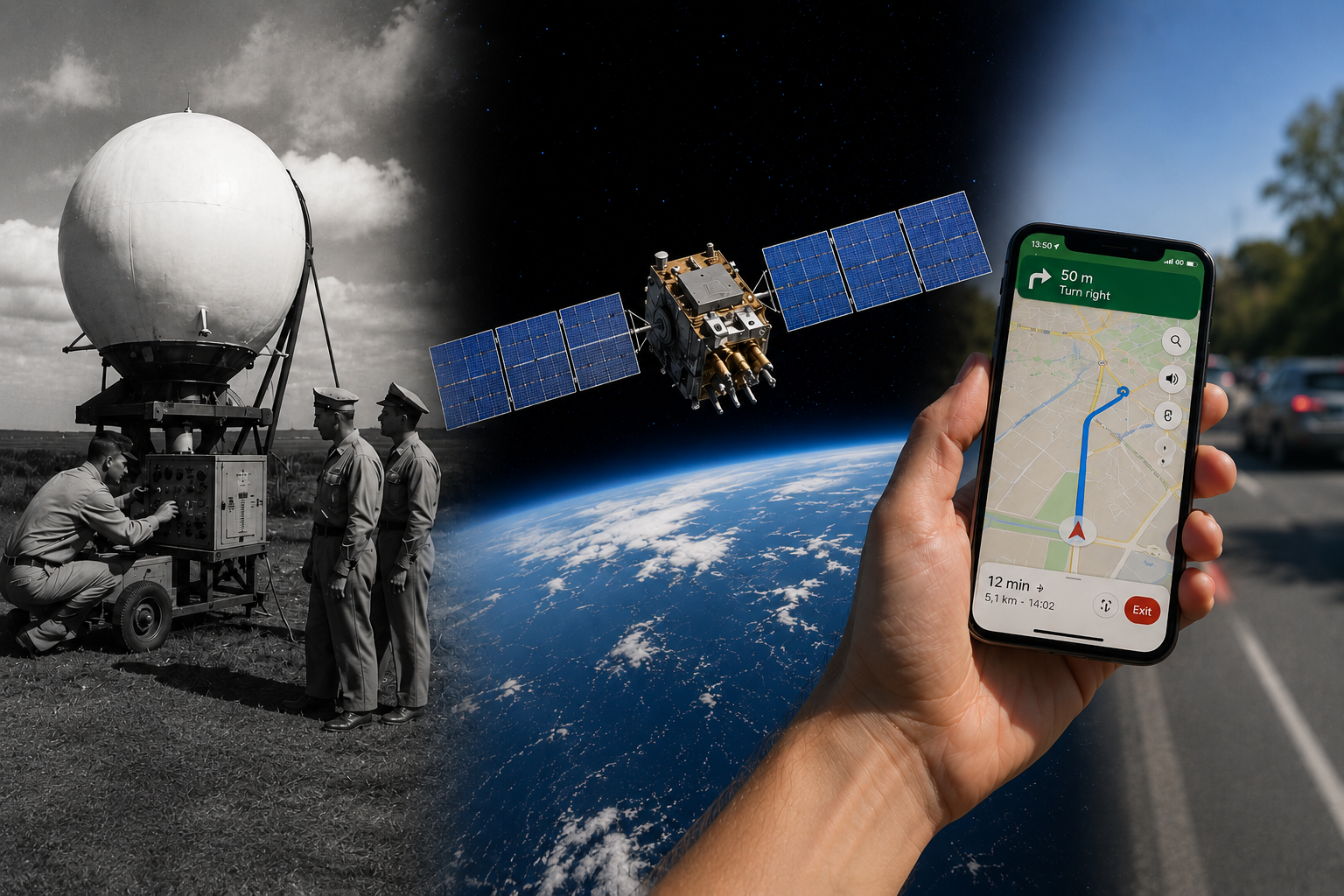
How Was GPS Actually Created?
The history of GPS dates back to the Cold War era. In the 1950s and 1960s, the United States began experimenting with satellite navigation, originally for military purposes. The first truly functional system was TRANSIT, used by the U.S. Navy from 1964.
However, the real breakthrough came in 1973 with the creation of the NAVSTAR GPS project — the system we now simply know as GPS. Its goal was to enable precise positioning anywhere on Earth, in any weather, and in real time.
The first satellites started transmitting signals in 1977, and the system became fully operational in 1993. Initially, GPS was intended exclusively for military use, while the public only had access to limited accuracy. It was not until after 2000, when the United States disabled the intentional signal degradation for civilian use, that GPS began massively entering everyday life.
Suddenly, the door opened for car navigation systems, logistics, smartphones, and the first tracking systems.
TIP: Solight luggage tracker, compatible with Find My
From Navigation Systems to the First Trackers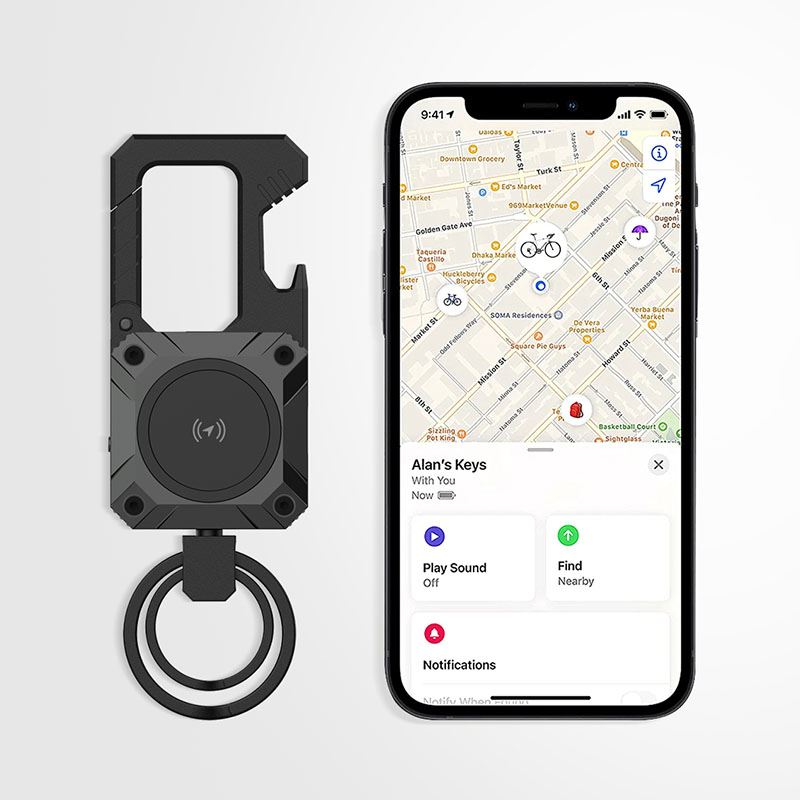
The first commercial GPS devices were large, expensive, and energy-demanding. They were mainly used in freight transport, marine navigation, and aviation. Ordinary people practically never encountered them.
A major change came with the development of GSM mobile networks in the 1990s. Developers began combining GPS modules with mobile communication. The device could not only determine its position, but also send it to the user or dispatch center.
This gave rise to the first GPS trackers.
At first, they were mainly intended for companies and fleet management. Gradually, however, the technology became smaller, cheaper, and more accessible to everyday users. GPS trackers started being used to protect cars, motorcycles, construction machinery, and valuable shipments.
The Era of Smart Trackers
Modern GPS trackers are no longer just simple location devices. Today’s units combine multiple technologies at once and function as comprehensive security and monitoring systems.
In addition to GPS itself, trackers now also use other satellite systems, such as Europe’s Galileo, Russia’s GLONASS, or China’s BeiDou. Collectively, these systems are referred to as GNSS. Thanks to their combination, localization is significantly more accurate and stable even in cities or places with weak signal coverage.
The communication technology of these devices has also evolved dramatically. While older trackers operated via traditional GSM networks, today’s models use modern IoT technologies such as LTE-M or NB-IoT. These were developed specifically for smart devices with low power consumption.
This means that a modern tracker can operate for months or even years without charging while still regularly transmitting location data.
TIP: Solight bike tracker
Practical Applications
Smart trackers are now used not only for home protection, but also for securing personal belongings and everyday essentials. GPS trackers for bicycles are particularly popular, allowing users to monitor the bike’s location in real time through a mobile app. In the event of theft, the owner can quickly identify the current location of the bicycle and respond immediately. Modern trackers are often discreetly hidden inside the frame, under the seat, or within bike lights, and frequently include motion alerts or geofencing notifications.
Similarly practical are smart trackers for mobile phones, keys, wallets, or backpacks. Small Bluetooth or GPS trackers help users quickly locate lost items using an audio signal or by displaying the last known location on a map. Some models also allow location sharing with family members or provide SOS functions to increase the safety of children or seniors. Thanks to easy operation and smartphone connectivity, trackers are becoming a common part of the modern lifestyle.
TIP: Solight keychain tracker
What Modern Solight GPS Trackers Can Do
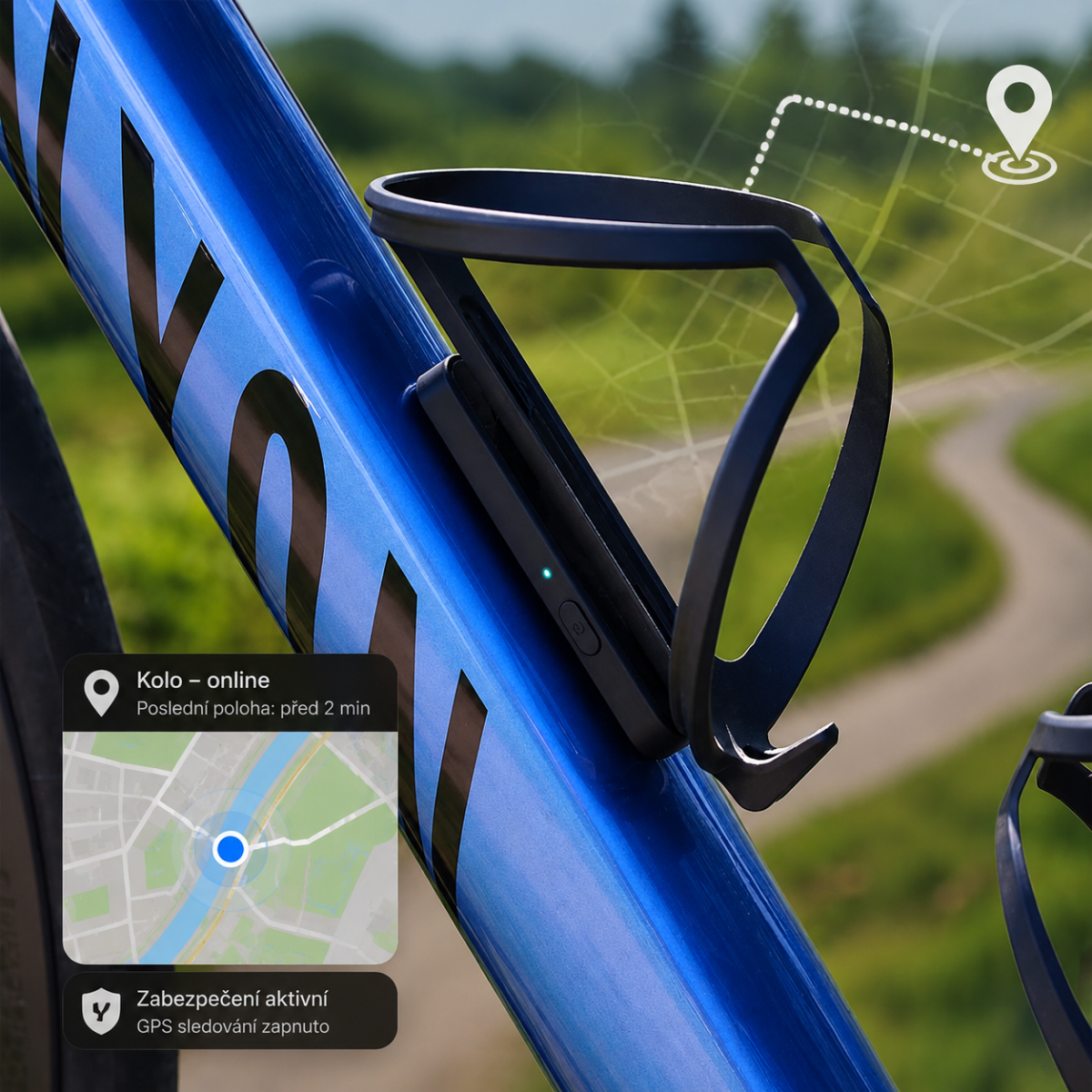 Modern Solight GPS trackers combine advanced GNSS systems with IoT communication technologies, enabling accurate and reliable real-time tracking.
However, it’s not just about displaying a location on a map. Today’s trackers can actively protect property and alert users to suspicious situations.
The most commonly used features include:
- real-time location tracking
- route and movement history
- alerts for unauthorized movement
- geofencing — notifications when leaving a defined area
- instant notifications in the mobile app
- monitoring of vehicles, equipment, or shipments
A major advantage of today’s devices is their ease of use. What once required professional installation and specialized software can now be set up by users themselves in just a few minutes through a mobile application.
GPS trackers are therefore becoming a standard part of security solutions not only for businesses, but also for homes and travel.
TIP: Solight Premium tracker
The Future of Trackers
The development of localization technologies is far from over. GPS trackers are becoming increasingly integrated with cloud services, automation, and artificial intelligence.
In the future, even more accurate positioning, longer battery life, and the expansion of satellite IoT communication are expected, enabling devices to be tracked virtually anywhere in the world — even outside traditional mobile network coverage.
Trackers will also become an even more important part of smart homes, business systems, and modern logistics. Instead of simply tracking location, they will be able to evaluate risks, analyze movement patterns, and automatically alert users to unusual situations.
The Technology That Changed the World
GPS is one of the technologies that fundamentally transformed the modern world. From military experiments and the first satellites, within just a few decades we have arrived at miniature smart trackers that help protect cars, equipment, and valuable assets.
Modern Solight GPS trackers demonstrate just how far tracking and security technologies have evolved — while also showing how important localization technologies will continue to be in the future.
TIP: Solight GPS trackers