AA battery: from invention to the future
6/13/2025 #Other
🕰 History of AA Batteries: How the Energy Revolution Began
The AA battery, also known as an AA battery, has a rich history whose roots go back to classic electrochemical discoveries of the 18th and 19th centuries. The first pioneer was Alessandro Volta, who in 1800 built the first functional battery – the so-called voltaic pile, made of alternating layers of metal and electrolyte.
Development continued in the 19th century thanks to inventors such as Georges Leclanché, who in 1866 introduced the so-called Leclanché cell – a predecessor of the modern zinc-carbon battery. This very principle later inspired the construction of the first compact batteries for portable use.
The AA format as a standardized size was defined by the American National Electrical Manufacturers Association (NEMA) in 1947, when sizes for consumer electronics were unified. A major contribution to commercialization and expansion was made by Lewis Urry, an engineer at Eveready (later Energizer), who in 1957 developed the first alkaline battery – a type with significantly longer lifespan compared to the then-common zinc-carbon cells. This breakthrough enabled the massive expansion of AA batteries in the 1960s and 1970s, especially with the rise of portable devices such as pocket radios, flashlights, and later game controllers and digital cameras.

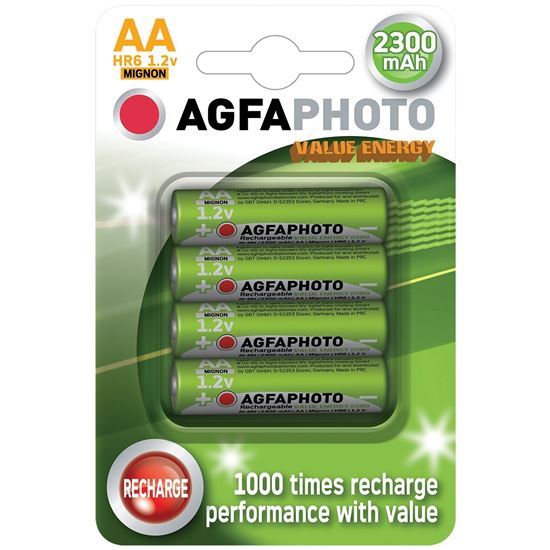


🔋 Present: The Battle of Capacity and Eco-Friendly Solutions
Today, AA batteries are produced in many variants:
The market has also shifted toward eco-friendliness: manufacturers compete in recyclable packaging, mercury-free chemical formulas, and extended lifespan of rechargeable cells. Many households have switched to rechargeable systems, especially with the rise of smart chargers featuring USB-C and battery status monitoring.
In addition, smart devices have become more widespread, optimizing energy consumption more efficiently – from wireless mice to smart home sensors.
🔮 Future: The End of AA? Or Their Renaissance?
Although modern technologies increasingly rely on integrated Li-ion batteries (especially in phones, headphones, and wearable electronics), AA batteries remain relevant wherever quick replacement, standardization, or low cost is needed.
So where is the future of AA batteries heading?
- Next-generation recyclable rechargeable cells – with higher energy density and lower self-discharge
- Standardization in smart home systems – AA batteries as universal power for sensors, controllers, and security devices
- IoT integration into cells – battery diagnostics directly in a mobile app
- Eco innovations – e.g. paper batteries, biodegradable packaging, cobalt-free chemistry
An interesting trend is also the return to classic formats, but with modern technologies. Manufacturers are testing rechargeable AA batteries with integrated USB connectors, combining charging convenience with mechanical compatibility.
✍️ Conclusion
AA batteries are one of the few technological formats that have survived the dramatic evolution of consumer electronics and still maintain a strong place in everyday life. From the beginnings of galvanic cells and historical figures such as Volta or Leclanché, through the revolution of alkaline batteries by Lewis Urry, to today’s rechargeable hybrids – AA cells continue to adapt to new challenges.
Their advantage lies in versatility, availability, and ease of use. While modern devices increasingly rely on built-in batteries, the AA format remains invaluable in areas where modularity, instant replacement, and long shelf life are essential – such as emergency flashlights, children’s toys, medical devices, cameras, or smart home sensors.
Environmental pressure and technological progress are also pushing manufacturers to invest in more sustainable materials, more efficient chemical processes, and innovations in recycling.