The right school backpacks for our children
9/14/2026 #Leisure Time
A school backpack is not just a practical way to carry textbooks, notebooks and other school supplies. A child carries it virtually every school day, so its weight, construction and the way it is worn can affect the strain placed on the back, shoulders and cervical spine.
When choosing a backpack, we should therefore consider more than just its appearance, size or number of pockets. Low weight, the right size, quality padding and adjustable shoulder straps are also important. It is equally important to teach children how to wear their backpack correctly and to regularly check its contents.
TIP: Take a look at our selection of THULE and CASE LOGIC backpacks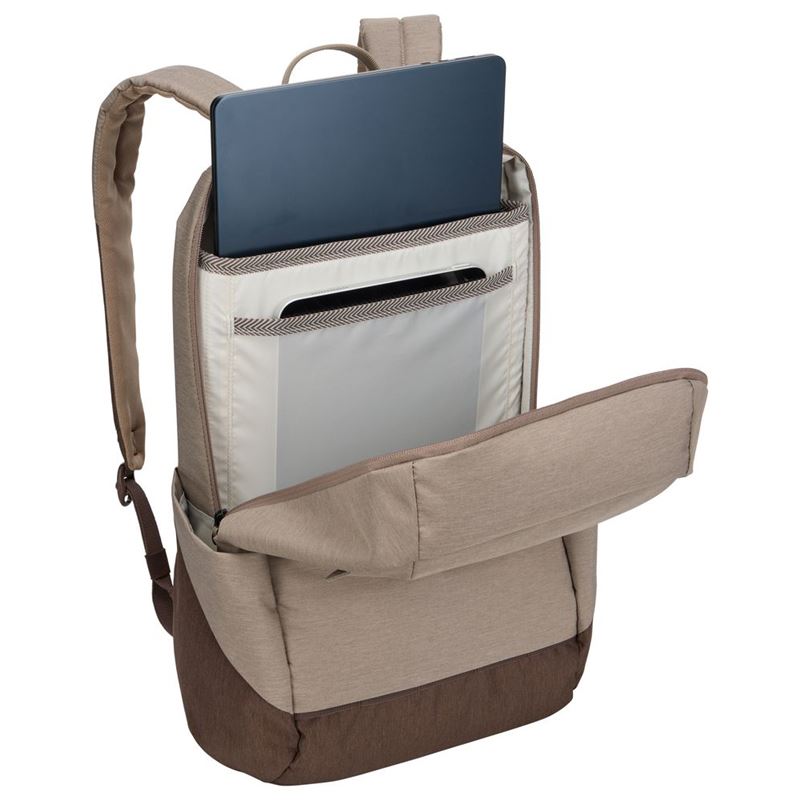
How much should a school backpack weigh?
One of the most important parameters is the total weight of the backpack, including its contents. It is often recommended that a school backpack should not exceed approximately 10–15% of the child's body weight. However, the lighter the backpack itself, the more capacity remains for textbooks and other equipment.
The total weight really includes everything – the backpack, textbooks, notebooks, laptop or tablet, a drink bottle and a snack.
As a general guideline, the limit could be approximately:
- child weighing 25 kg: approximately 2.5–3.75 kg
- child weighing 30 kg: approximately 3–4.5 kg
- child weighing 35 kg: approximately 3.5–5.25 kg
- child weighing 40 kg: approximately 4–6 kg
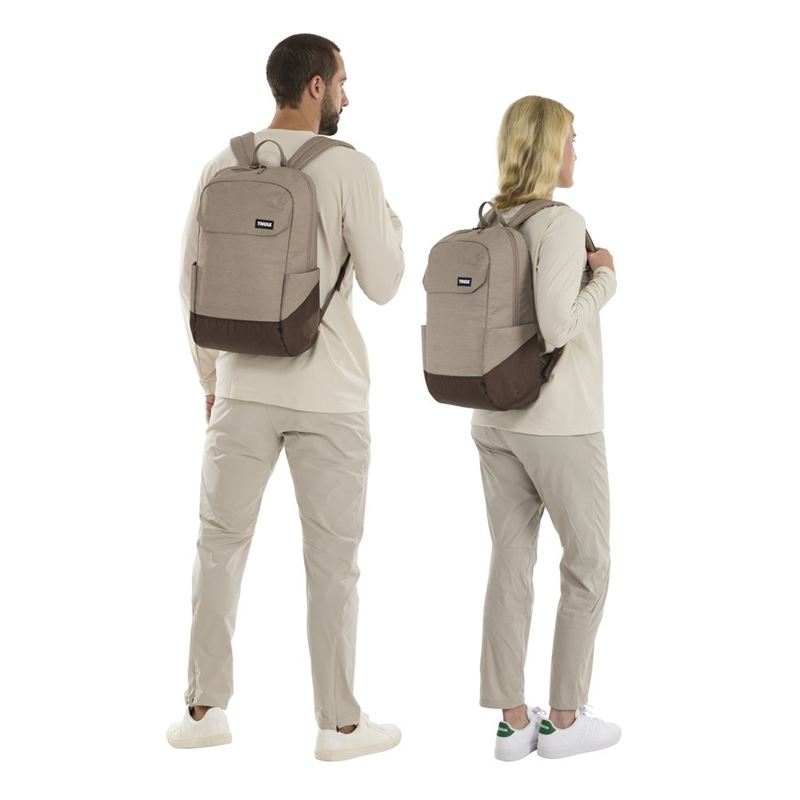
A backpack should be worn on both shoulders
A simple rule that makes a big difference: a child should wear a school backpack on both shoulders.
Wearing a backpack over one shoulder creates an uneven load and can put greater strain on one side of the body. The shoulder straps should therefore be sufficiently wide, padded and adjusted to the same length.
The backpack should fit closely against the back and should not hang too low. With some models, a chest strap can also help achieve a proper fit by stabilizing the shoulder straps and keeping the backpack closer to the body.
TIP: When choosing a backpack, look for lightweight backpacks with a padded back and adjustable straps.
The heaviest items should be placed closest to the back
It is not only about how much a child carries, but also how the load is distributed inside the backpack.
Heavy textbooks, a laptop or tablet should be placed in a compartment as close to the back as possible. Lighter items can go into the front or side pockets. Multiple compartments are therefore not just about organization – they also help distribute the weight more effectively.
With the contents arranged appropriately, the backpack's center of gravity remains closer to the body, meaning the child does not need to compensate for its weight by unnecessarily leaning forward while walking.
Thule: a practical solution for school and leisure
Modern backpacks from Thule combine practicality with an emphasis on comfortable everyday use. For example, the Thule EnRoute range features a padded back panel, adjustable shoulder straps and a chest strap. 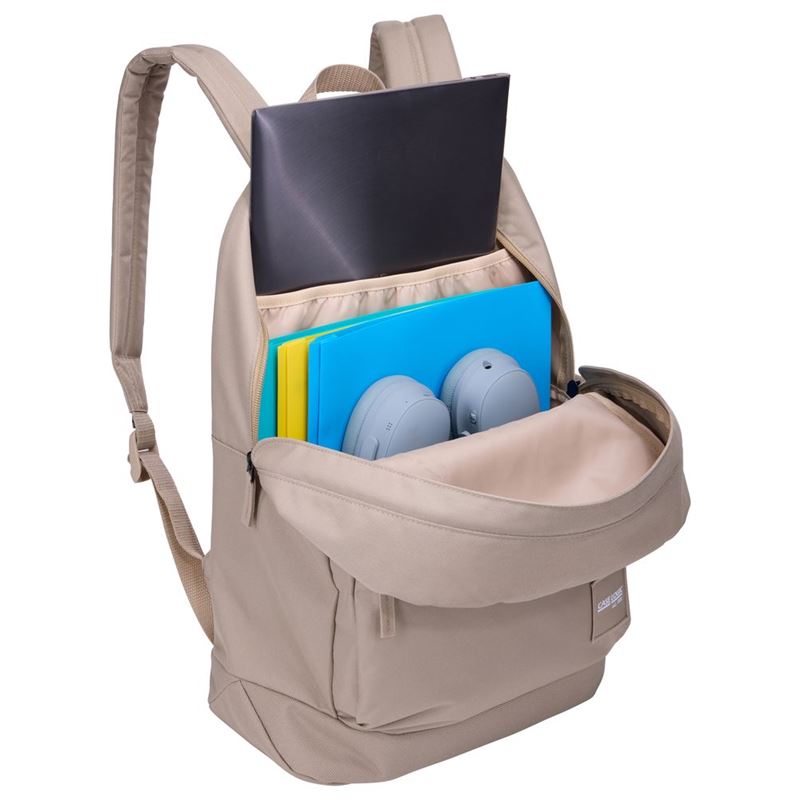 The practical organization also makes it easy to keep a laptop, tablet, books and other equipment neatly separated.
For older children and students, for example, the Thule EnRoute 23 L can be a suitable choice. For a smaller load, there is also the more compact Thule EnRoute 21 L.
TIP: Thule backpacks are suitable not only for school, but also for travel or everyday commuting.
Case Logic focuses on low weight and practicality
Case Logic backpacks are another interesting alternative. For example, the Case Logic Commence features a padded back panel, contoured shoulder straps and separate compartments for a laptop, tablet, books and other school equipment.
Another advantage is its low weight. With a backpack that a child carries every day, every gram saved means more capacity for the school equipment that is actually needed.
A backpack is not a storage room
One of the simplest ways to reduce the daily load is to regularly check the contents of the backpack.
Children often carry things they do not actually need that day. Old notebooks, textbooks from previous days, several drink bottles or various small items can add hundreds of grams or even a kilogram over the course of a week.
It is therefore a good idea to go through the backpack at least once a week and remove everything the child does not currently need. If the school provides lockers where some textbooks or supplies can be stored, it is worth making use of them.
TIP: A well-organized backpack helps not only with organization, but also with evenly distributing its contents.
How can you tell if a backpack is too heavy?
A child may not always point out that their backpack is too heavy. Signs to look out for include:
- noticeable leaning forward while walking
- raising the shoulders upward
- pressure marks from the shoulder straps
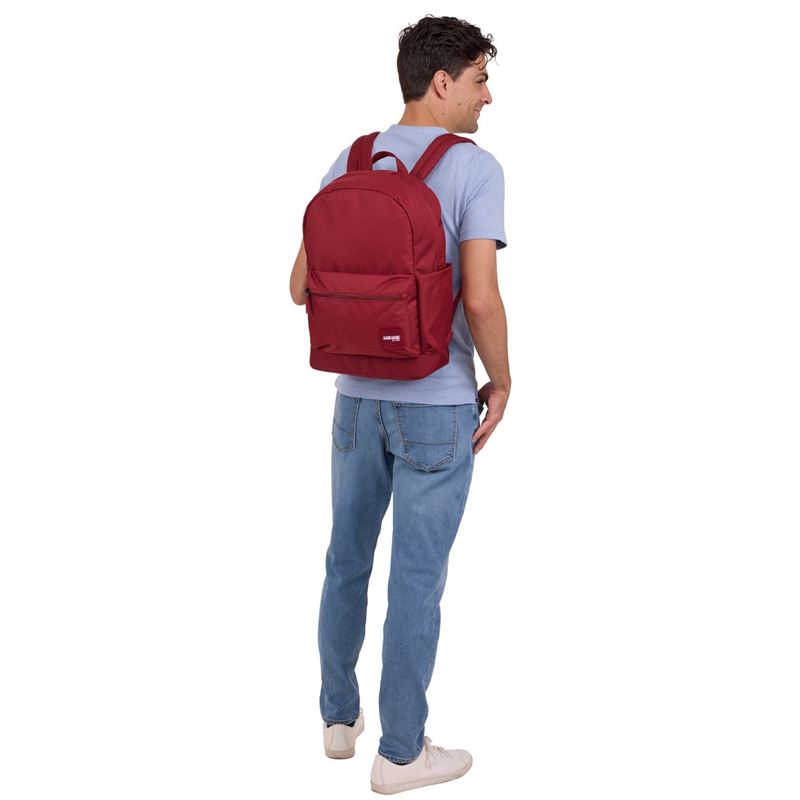
- frequent complaints of back or shoulder pain
- the need to take the backpack off while walking
- noticeable leaning of the body to one side.
If a child significantly changes their posture while walking, it is advisable to check the weight of the backpack, its adjustment and how the contents are distributed.
What to look for when choosing a school backpack?
When choosing a backpack, it is worth paying particular attention to:
- low weight – the lighter the backpack, the better
- the right size – the backpack should be appropriate for the child's body size
- a padded back – for a comfortable fit against the back
- wide and adjustable shoulder straps – for a proper fit
- enough compartments – for better load distribution
- a chest strap – for better stability on some models.
It is also important to consider the child's age, height and body build. The backpack should not be unnecessarily large or heavy and should allow the child to move naturally.
The right backpack is an investment in your child's comfort
A child will carry their school backpack virtually every day. It is therefore worth paying the same attention to choosing one as to choosing other school supplies.
The brand or design itself is not the most important factor. A lightweight backpack of the right size, both shoulder straps properly adjusted, heavy items placed as close to the back as possible, and regular checks of the contents – it is precisely this combination of simple rules that helps minimize unnecessary strain.
And if you are looking for a backpack that combines low weight, practicality, durability and comfortable carrying, it is worth considering the range of Thule and Case Logic backpacks.
Explore our range of Thule and Case Logic backpacks →
The information in this article is provided for general informational purposes. If a child experiences recurring or significant pain in the back, shoulders or neck, it is advisable to consult a pediatrician or physiotherapist.